Rain, Rain, Go Away…

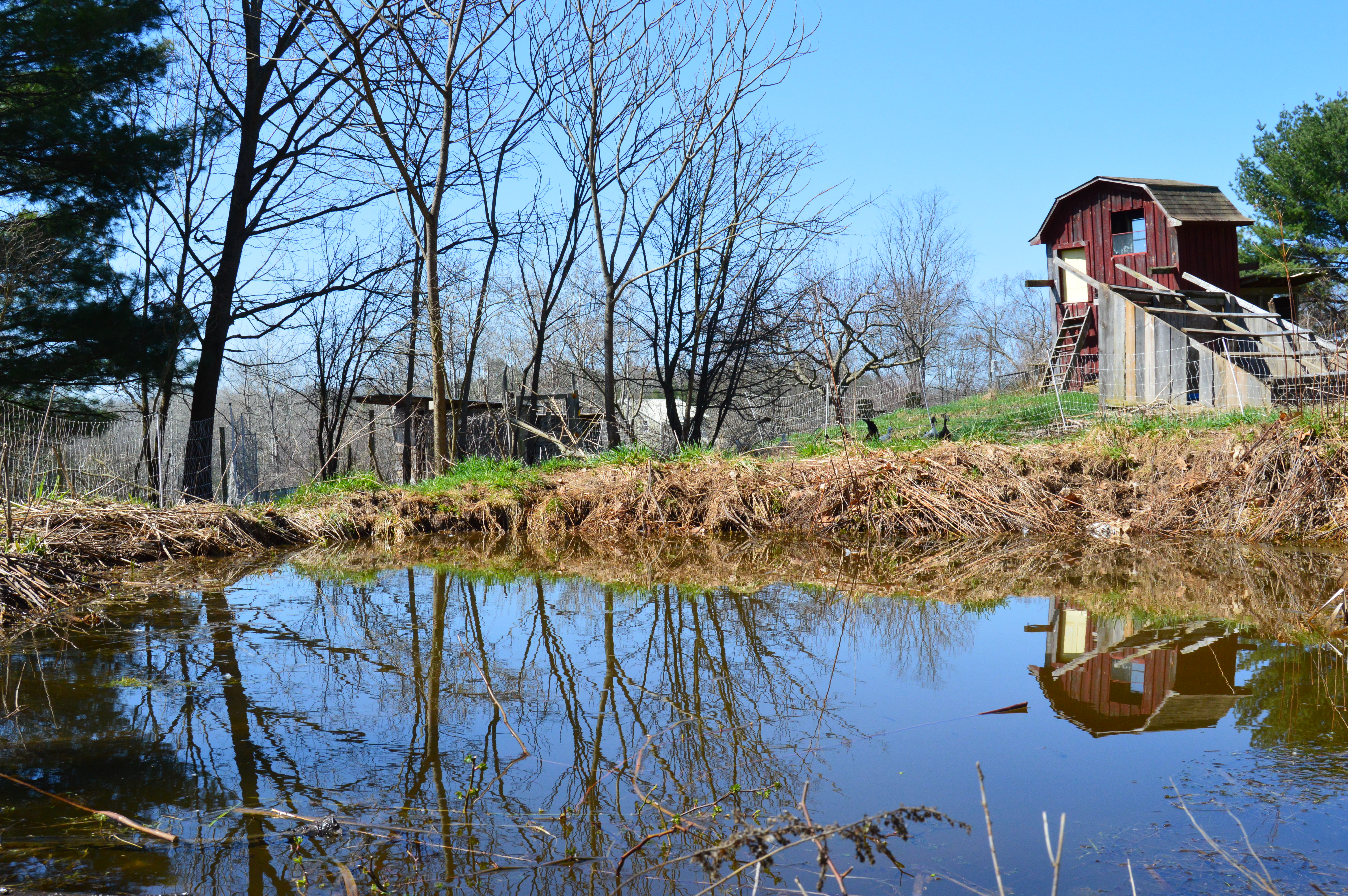
We are on day three of non-stop rain.

At first, it was really welcome.  It had been dry and hot and we needed some rain.  We just didn’t need ALL the rain that ever there was.  But we got it.  And we keep on getting it.

Image

Image

The front garden is partially submerged.  Dave went out yesterday and dug trenches to provide some run-off in the hope that the crops wouldn’t just completely drown and be ruined before we see an end to all this water.

Before digging the trenches, only the tops of many of the plants were showing and it seemed inevitable that all the work we’d

done since the beginning of April was going to be, quite literally, washed away.

The trenches seemed to buy us a little more time, but the rain is just non-stop, so whether the plants are going to make it remains to be seen.

Even the flower planters on the deck can’t seem to drain fast enough and are filled to overflowing.

Despite our best construction efforts, we found Cindy The Very Pregnant Goat huddled in the last remaining dry corner of her shed this morning.  The roof was dripping from a couple of spots and the ground itself is so saturated, the water has started coming up from below.

We raked out all of the damp straw, gave her an entire bale of new hay to cover her floor (and to eat) and draped the shed with our largest tarp. It’s hard enough to be pregnant; she didn’t need the headache of also being soggy.

Image

Cindy is due to kid in about a week.  We are hopeful that the rains will have subsided by then and that we can welcome her babies in the sunshine.

Stay tuned!

Posted in Uncategorized | Tagged , , , , , , , | Leave a comment

Hatching Chicks: An adorable, and slightly gross, photo essay

About a month ago, we started setting aside eggs to incubate.  Since our original flock of Rhode Island Reds was starting to thin out, we felt it was time to start replacing those birds in order to maintain a good level of egg production.

Our flock currently consists of seven Rhode Island Reds, Two Bantam Splash Cochins, One Golden Laced Cochin, and five Black Copper Marans.  Of those 15 birds, two are roosters, so we have 13 laying hens which give us between seven and nine eggs per day at the moment.  The number of eggs we get changes based on a number of factors, only about one or two of which we have figured out.  One reason for not laying is that the chickens are molting (which happened back in March and April).  This means they are losing their feathers and putting their energy into regrowing feathers, rather than making eggs.  Another reason is age; chickens are highly productive in their first year or so and can lay an egg a day.  We’re seeing this right now with our Black Copper Marans who just started laying three weeks ago. As they age, however, production slows and can go down to as few as one or two per week. Right now, we have a combination in the flock; our Rhode Island Reds are aging out and slowing down production, but our Marans and Cochins are solidly in their first year of laying and are enthusiastic and prolific.

So, a little over three weeks ago, we started putting eggs in the incubator.

ImageThe eggs at the bottom of the pic are the RIR eggs.  They are the largest by a long shot–imagine the extra large eggs you buy at the supermarket on steroids–then a little bigger.  Above that row on the left are the smaller, speckled Golden Laced Cochin eggs, and then on the right and above that, the teeny Bantam Cochin eggs.  We started this batch on April 18th.

The incubator itself is a pretty good model.  Someone on BackyardChickens.com (I did not make that up, by the way) recommended it to me and we’ve been looking forward to this opportunity to take it for a spin.  This model has a self-turning mechanism, which is great, but not at all a necessity as turning eggs by hand is in no way a hardship.  The main task for the human involved is maintaining the proper heat and humidity levels.  This was a task that required relatively constant tweaking and checking.

ImageThis is the top view of the incubator.  The top of the gauge shows the temperature, which is meant to be kept at 99.5 degrees.  The bottom of the gauge shows the humidity, which is meant to be kept at 55 percent.  The little red knob below the gauge controls the temperature.  There are two holes with red plugs, one at the very top of the machine and one at the very bottom, that help control the humidity.  In this picture, you can see that the red plug at the bottom is in, but the one at the top has been removed.  We did a lot of this manipulation in an effort to control the humidity.  Not difficult, but definitely time consuming, especially once the hatching starts.

Speaking of hatching, our first chicks appeared a day early and surprised us totally.  We completely missed the first shells cracking or any of the process at all, for that matter.  We’d been away for about five hours and I realized I hadn’t checked the temperature or humidity levels for at least seven hours.  I ran to the incubator to fiddle with the settings to find this:Image

And this:ImageAdmittedly, we were fairly shocked.  Despite the fact that we’d gone through this entire process and knew that our eggs were fertile for the most part, we just didn’t expect this first batch to actually produce real, live, honest-to-goodness chickens.  Now, all of a sudden, we had three.

And then we had three more.

We’d set up an area in the basement for the newly-hatched chicks to develop in until they are ready to move outside in a few weeks.  In this space, they are under a heat lamp and have food and water available to them.  Within a couple of hours, the six chicks were fluffed out and learning to drink water and eat food.

And just as we were starting to think this whole thing was a cinch and hatching chicks couldn’t be easier, we encountered a bit of a bump in the road.

Two of the chicks had started to hatch on the afternoon of the 2nd.  We kept an eye on them, but by the time we were going to bed that night, almost no more progress had been made.  In our extremely limited experience with hatching, we didn’t know much, but we did know that it didn’t seem to take chicks 12 hours to leave the shell.  Once the process started, it seemed to be complete within about five hours, give or take.  When we got up the next morning, both eggs were still in the exact same condition.  We started to research our options.

We learned that some chicks are too weak, for whatever reason to complete the hatching process unassisted.  While you should never assist a chick that has shown no signs of hatching, we found ourselves in a situation similar to a woman’s water breaking, but the baby still isn’t being born.  Intervention was called for, or the chick would run out of nutrients and moisture and die in the partially-cracked eggshell.

We started by creating a “zipper” carefully around the entire shell.

IMG_5804Using a dull tweezers, warm water, and a warm, wet washcloth, we removed the shell bit by bit, being careful not to cut through the membrane.  We dripped warm water onto the membrane in an effort to soften it, so that the chick could try to emerge on its own once the shell was out of its way.

IMG_5807 IMG_5819

We could see where the chick’s beak was, and knew that it was important to keep the water on the membrane, but nowhere near the beak.  Chicks are prone to drowning and even the smallest drop of water could drown it.

Here you can see the surreal image of the chick still contained within the membrane, but free of most of the surrounding shell.  This chick was exhausted and once we had the shell removed, we could tell it had no energy to get free of the membrane either.

We discovered that no amount of water was going to soften the membrane fast enough to save this chick.  We decided we needed to carefully remove the membrane as well.

IMG_5823We had to repeat the identical process with the second chick who was also not progressing.

Once this was done, we placed both newly-freed chicks back in the incubator to warm up and dry out.  Unfortunately, when we checked back on them a little while later, they had totally dried out and were literally stuck to the bottom of the incubator, unable to move.  Next, we put them on warm washcloths to keep that from happening again.  We didn’t feel they were ready to move down with the other chicks yet, so we hoped this would work.

It didn’t really work very well.

The next time we checked, they’d both rolled off the washcloth and were jammed into a crack between two of the incubator shelves.  This is when it got Darwinian.

We figured we’d done what we could and these little guys were either going to make it or they weren’t.  We moved them down with the rest of the chicks and placed them under the heat lamp.  They both promptly fell into the pine shavings face-down and fell asleep.

Over the course of the next few hours, however, they started to move around and dry out.  By the next morning, they were verging on fluffy, although they still looked like they could use some assistance with a fairly aggressive matted feather problem.  They had learned to walk.  They were eating and drinking.  They seemed to have survived.  The ninth chick hatched, problem-free, late last night.

IMG_5839

This was our first Bantam hatch and a Bantam chick might be the smallest non-insect living creature that we’ve ever seen.  The fully-formed chick was about the size of a large gum ball, but was up and walking within minutes of hatching.  We let this one spend the night in the incubator and moved it down with its new flock this morning.

The three black and three yellow chicks are the ones that hatched, problem-free, over the first 24 hours.  The two scraggly looking birds are the ones that were “hand hatched,” and the brand new Bantam is snuggled between the two black ones at the bottom center of the picture.  This will give you an idea of size.  Pretty cute, huh?IMG_5847

Posted in Uncategorized | Tagged , , , , , , | 1 Comment

Hand-Drawn Farm Map

In response to a request after the last post, I have done my best to draw a to-scale rendition of our little farm.  Hopefully, this will clarify where everything is and how we’ve managed to stuff so gosh darned much into just two acres!

IMG_5720

Posted in Uncategorized | Tagged , , , , , , , , | 2 Comments

Establishing the Back Garden

When we first moved to our little farm it wasn’t a farm at all.  These two acres held a house, an open garage, and a small outbuilding with no doors that had been used as a tractor shed. There had never been farming of any kind and there really hadn’t even been any gardening, as far as we could tell.  The lawn was just a lawn and the trees and plants bore no fruit suitable for human consumption.  We were starting at the beginning for sure.

Our first step was to build the hoop house.  We did this in the (fortunately mild) winter of 2011.  When the ground had thawed in the spring of 2012, we broke ground–quite literally–on the front garden.  Over the summer and fall months, we extended the garden with raised beds and a continued removal of sod.  This expansion continues even now and the front garden is more than twice its original size.

Last year’s pigs were kept in the back field which had been a sea of goldenrod and not much else.  Our soil is unbelievably rocky and so we felt that the pigs would do a better job of rejuvenating the soil than any tractor could.  This proved to be the case.  Once the pigs were gone, that portion of the back field sat empty and had a loneliness about it that just wouldn’t go away.  We knew we wouldn’t keep subsequent pigs on that same spot because it had been overly wet; keeping the pigs dry had been a constant battle.  Not having our boots sucked into the muck had been a challenge as well.

In an effort to channel some of the excess water away from the pigs, we rented a small backhoe and dug a fairly deep trench along the length of the area.  It ran from up behind the garage, down in front of the pig den, and down the hill into the stream way below our property line.  During this digging, Dave decided he wanted a pond.

Oh! the pond.  I mean, who wouldn’t want a little pond?  They make the view even more bucolic; they provide a home for peepers and salamanders; the occasional heron will catch an evening snack in them…  So, Dave dug out a little hole for a pond.  It was originally meant for the pigs to have someplace to cool off, so it was only dug out to about three feet deep and maybe 20 feet across.  Because last summer was so dry, it was usually not much more than a muddy pit.  Occasionally, however, it would fill with muddy water and the pigs would wade through it.  It made us happy to have a little pond, such as it was.

The pond has become a bit of a “thing” for Dave.  He believes in the pond.  He wants the pond to succeed.  He sits next to the pond and envisions how to make it better.  He has made the pond better.

Part of expanding the front garden was removing the sod.  We did this square by square, mostly transporting it with a wheelbarrow.  Last year, we created a sod wall around the garden with most of it, but this year, we moved the sod back by the pond and started creating a “lawn” around the edges.  Using sod, straw bales that had been left outside over the winter and started to rot, and rocky soil, we bolstered the back wall of the pond (the wall that would fall away under the weight of water otherwise).  And now, the pond kinda looks like a nice little pond.

During peeper “season,” we heard hundreds of peepers making their melodic racket in that little spot.  We then noticed that they’d departed, leaving behind thousands of eggs.  We felt like this was a sure sign of a healthy ecosystem and were happy to see them there.  Today, those eggs have become tadpoles.  The little pond is quite alive; we’ve seen salamanders in there as well; we’re thinking about getting some goldfish…

And since those piggies did their work so well, the field in front of the pond is no longer filled with goldenrod or rocks (or anything but dirt and pig poop, for that matter).   The Back Garden has been born.  We rented a wonderful machine called a Dingo from our friends’ store and used it to sift out the larger rocks left behind by the pigs and to move fresh topsoil over the area slated for gardening.  When mapping out the gardens for this planting season, we decided that the back garden would be great for those oversized plants that took up so much space in the front garden last year.  So, we have now prepared the back garden for squashes, melons, cucumbers, and the like.  We fenced it off yesterday to keep the chickens from eating our seeds and will start planting (and transplanting) over the next week or so.

Image

Posted in Uncategorized | Tagged , , , , , , | 3 Comments

Pig and Other Pig

We made the four-hour round-trip journey yesterday to the beloved farm of our good friends, Bernie and Amie Amlaw, in West Swanzey, New Hampshire.  There, we selected four of their litter of seven-week old piglets, two for us and two for a neighbor.

We had visited this particular group of pigs just two weeks ago when they were decidedly smaller and Dave had the dubious honor of learning to neuter them.  It was a task Bernie saved for our visit.  He knew that since we’ll be breeding sows this year, we’ll need to be able to castrate our own male pigs.  Dave braved the lesson; the girls and I waited outside.

Oh, the squealing.

So, we felt a certain kinship to this little gang and were happy to be able to continue our relationship in a gentler, more loving manner.

We chose two boys.  After last year’s pigs, we learned that the boys are sweeter and gentler and the girls tend to be… well… bitches.  We’re still on the fence about naming them.  I’m feeling like it won’t matter either way; we’re going to fall in love with them, names or no.

Image

Posted in Uncategorized | Tagged , , , | Leave a comment

Prepping for Piggies

It has been five and a half months since Hammy, Bacon, and Pork Chop, our beloved pigs-turned-pork, left our little farm.  The details of that day remain vivid in the minds of those of us who were there.  We watched these gorgeous creatures go from fat and happy compost eaters to fantastic edibles in their own right; ready for the table over the course of a couple of days.  The transformation was both violent and beautiful, torturously sad and wondrously happy, seemingly final and clearly just the beginning, in a relative blink of an eye.

And that ending was, in fact, just the beginning.  We learned so much from raising those three little pigs into three big, fat hogs.  They were brave, and fierce, and loving, and they dug their impressive snouts deeply into our hearts, scoring belly scratches and the occasional kiss on the nose, along the way.  We never intended to keep any of the original three over the winter.  We were told to raise them exclusively for meat the first season and to plan to overwinter one or two the second year.  So that’s what we’ve done.

As we kick off season two, we’re applying the lessons we’ve learned and making some changes.  The first year, we got our three pigs all at once.  They were all the same age and, as a result, all were ready for slaughter the same day.  We set a date (“Pig Day”) and assembled all the necessary items and people to get the job done.  It was a long, cold, intense, and exhausting day.  Finishing three pigs all at once was a bigger job than we could have anticipated and not one we relish repeating.  There was also an added sadness to having everyone gone at the end of the day; no more grunting or snoring from the pig area… It was all just a little too quiet.

This year, we’ve decided to space out getting our pigs so that we’ve got different ages and, therefore, different finishing dates.  We are picking up the first two tomorrow and are hoping to be able to grab two that are between four and six weeks old.  We plan to wait about six weeks before picking up two more, also hopefully in that age range.  Finally, we plan to get the last two about six weeks after that.  These last two will not be finished but, rather, will be our overwinter pigs.  These will both be sows who we will bred to a boar sometime in early February.  Since pig gestation is three and a half months, this will get us piglets sometime in May, which is perfect for keeping the piglets warm enough without having to have a heated, indoor space (which we don’t).

The other lesson was about the pig’s den.  Since we knew we weren’t keeping the pigs over the winter last year, we were able to build a structure that didn’t need to be able to survive beyond the fall.  It was a totally sweet, Gilligan’s Island-esque sort of affair.  It held up through most weather, needing reinforcements here and there (as well as the occasional tarp).  Mostly though, it was great and the pigs were completely happy there.  It would not have held up through winter, however, and there were some real changes that we needed to implement for that to be possible.

We knew that pigs can pretty much keep themselves warm as long as they have one another.  Aside from being inherently social creatures, pigs actually use their bodies to keep each other warm.  They snuggle.  What they cannot do is keep themselves dry; that part was our job.  We had to create a structure that was just big enough to accommodate the pigs without excess space for heat to escape or for water to come in.  Dave came up with this very complicated blueprint:

IMG_5548

We had been incredibly fortunate to have a friend who lost one of his sheds during the winter who told us that we were welcome to take what we wanted as long as we did the disassembly and hauling ourselves.  This ended up being a veritable gold mine of reusable lumber and we built the goat shed and the new pig barn almost entirely from what we salvaged from him.

IMG_5479

Each and every board had a minimum of four, and as many as 16, rusty nails to be removed.  Dave and I set up a nail removing operation that took the better part of a day and ended up with a stack of usable building material that would have cost a small fortune new and, in our opinion, wouldn’t have looked nearly as good.

Once again, we enlisted the help of our good friend, applewood bartender, novelist, and chicken killer, Geoffrey Young.  This past Wednesday morning, the three of us set to work on creating a place even a pig could love.

Since we always work best under a deadline, we waited until five days before getting the pigs to hammer our first nail.  This played out beautifully and by the end of day one, we’d made this:

IMG_5506

The idea behind the dramatically slanting roof is that we manage water runoff efficiently and also maintain a smaller, more cozy interior space.  Because part of the salvage deal included corrugated metal roofing, we measured the top pieces of wood to suit the size of the metal we had.

By the end of day two, we’d gotten this far:

IMG_5517
The front view with the spaces for the door and window completed.

IMG_5518

The side view with the roof complete.

We plan to add a sort of DIY pvc pipe gutter at the base of it to protect people and animals from the sharp edge, but also to direct rainwater away from the base of the structure.

Day three was colder and overcast.  It was difficult to motivate to put on the finishing touches and Geoff and I had to drive down to Brooklyn anyway.  So, we left the finishing work for Dave (and we’re pretty darned sure he liked being able to finish without all the distractions we tend to provide).  He purchased a couple of hinges, as well as a barn door track and fashioned a door from the bits and pieces of scrap wood that remained.  He also installed the window.  When he was done, it looked like this:

IMG_5544
We will be getting our first two pigs tomorrow and are SO excited!  We have really missed the grunting and rooting and general silliness pigs get up to.

Stay tuned for more on this year’s pigs!IMG_5545

Posted in Uncategorized | Tagged , , , , | Leave a comment

D.I.Y. Biodegradable Seed Planters

Y’know how when you finish a roll of toilet paper, you’re always trying to come up with a new and innovative use for the cardboard roll?

No?  That has genuinely never crossed your mind before?  Oh.

Well, let me tell you.  We spent the winter collecting those cardboard rolls until the bag was full to bursting and the dogs started stealing the ones at the top to shred into teeny, tiny, slobber-coated pieces which stuck to the bottoms of our feet as we walked over them. Why would we do such a thing, you ask?  Because those otherwise discarded rolls are ideal vessels for seed planters, when modified ever so slightly.

Since the beautiful spring weather took a break today and it rained sleet for five straight hours, today seemed like the perfect day for this indoor project.  

We’d collected about 55 toilet paper rolls and another dozen or so paper towels rolls.  The whole process is one which would make Henry Ford proud… assembly line all the way!  

First, we cut the paper towel rolls into thirds, then we cut four equidistant slits into one end of each roll.

Image


Then, we folded the newly-created flaps down to form a base:

Image


Next, we put them into a tray, filled them with organic soil (with vermiculite – this is a mineral that aids the soil and encourages seed growth – highly recommended) and watered the soil.  

Image


Now, we were ready to plant our seeds!  We planted about 11 more (each) of seeds that had gone into the hoop house seed trays last week.  We are hoping that this little planting of about 75 plants will succeed and can be dedicated to growing salad mix for applewood!

Image

The best part about these little planters is that there is no transplanting involved; the rolls go straight into the ground and decompose as the plants grows.  This is something you can do anywhere; give it a try!

Posted in Uncategorized | Tagged , , , , , | Leave a comment